MP Ndindi Nyoro Warns Kenya Could Lose KSh 80 Billion in Safaricom Share Sale
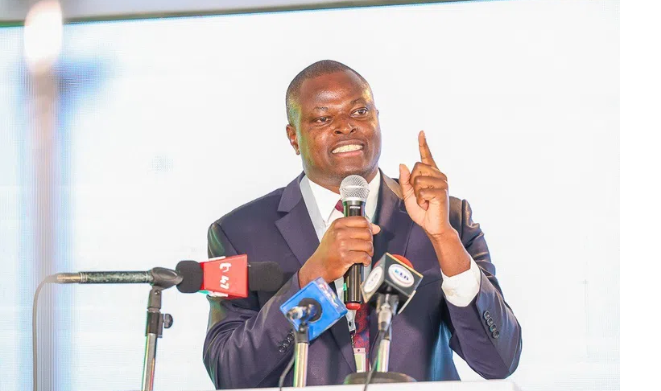
The controversy surrounding the partial sale of Safaricom shares escalated after Kiharu MP Ndindi Nyoro warned that Kenya could lose billions of shillings by not using a competitive international bidding process. Speaking before the Joint Committee on Finance and Privatisation, Nyoro urged lawmakers to reject the government’s proposed divestiture approach, citing potential losses of up to KSh 80 billion.
The legislator criticized the Communications Authority for allegedly creating this loss through a controversial waiver on license renewals prior to the transaction. Nyoro argued that Kenya would have benefited more if the government had subjected the sale to an international competitive process. “We would just cut corners, sell government assets for free, and purport to be the only buyers in the market… who said they are the only buyer?” he questioned.
Nyoro, former Chair of the National Assembly Budget Committee, highlighted that the six billion Safaricom shares being sold to Vodafone should retail at KSh 45 per share, rather than the proposed KSh 34. He added that the Communications Authority’s unilateral discount on licenses had already caused a loss of KSh 40 billion before board approval.
The MP also raised concerns about transactional costs, noting that private entities stood to gain significantly from the partial divestiture of the government’s stake.
Vodafone Kenya is set to acquire 15% of Safaricom from the government at KSh 34 per share, in a deal worth roughly KSh 204 billion, with the government receiving an additional KSh 40.2 billion upfront for future dividends on its remaining 20% stake.
Nyoro criticized the government’s reliance on the Nairobi Securities Exchange (NSE) share price for valuation, calling it “incorrect and naïve,” especially given the stock market’s long-term bearish trend. He noted that before Safaricom’s investment in Ethiopia, its share price stood at KSh 45, valuing the company at over KSh 1.8 trillion, and argued that the current valuation should exceed KSh 2.5 trillion.
He also pointed out the disparity between Safaricom’s price-to-earnings (P/E) ratio of 16.1 and higher valuations of regional and global peers, highlighting that the stock may be undervalued. Nyoro alleged that the recent immobilization of 16 billion shares by the buyer in June 2025 may have artificially suppressed the price, giving the buyer an unfair advantage.
To maximize value for Kenyans, Nyoro proposed three alternatives:
- Break Safaricom into three distinct entities – Telco, Financial Services (M-Pesa), and Towers – as the combined value would exceed the current whole.
- List Safaricom on a mature market like the London Stock Exchange to attract global investors.
- Conduct a transparent international bidding process after listing to ensure the highest possible sale price.
The joint Committees on Finance & National Planning and Public Debt & Privatisation are concluding the public participation phase on the proposed sale. While Treasury CS John Mbadi has defended the KSh 34 per share price as fair, Nyoro’s dissent is expected to spark heated debate when the matter is discussed in Parliament.